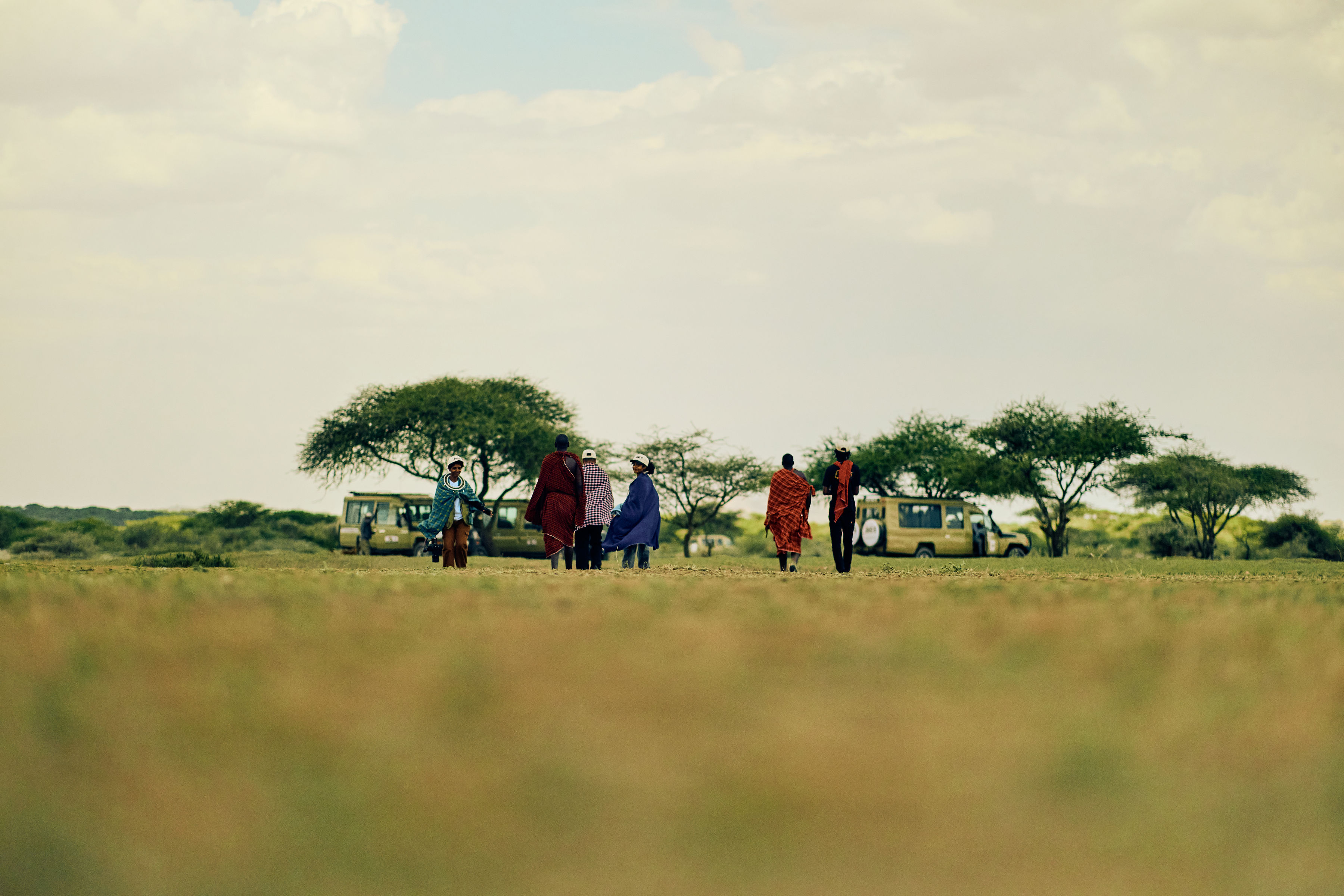
You need less than you think. Most camps do same-day or next-day laundry, so you can pack for three or four days and rotate. Keep it to a soft bag rather than a hard case, especially if any of your trip is by light aircraft.
Clothing
- Neutral colours — khaki, olive, tan, brown. Avoid bright white (shows dust), dark blue and black (attract tsetse flies in some areas), and bright colours.
- Lightweight long-sleeved shirts and trousers for sun and insect protection; a few T-shirts and shorts
- A warm fleece and a light jacket — dawn game drives and the Ngorongoro rim are genuinely cold
- A wide-brimmed sun hat, a buff or scarf for dust, and a swimsuit
- Comfortable closed shoes or light hiking boots; sandals for camp
Kit
- Binoculars — one pair per person makes a huge difference (8x42 is ideal)
- Camera with a zoom lens, spare batteries and memory cards, and a bean bag or small beanbag for steadying shots on the vehicle
- A universal plug adapter (Tanzania uses UK-style Type G) and a power bank; camps usually have charging points but not always in the room
- A small daypack for the vehicle
- Head torch
Health & toiletries
- High-factor sunscreen, SPF lip balm, and strong insect repellent (DEET-based)
- Antimalarial tablets (prescribed by your doctor), personal medication in its original packaging, a small first-aid kit, rehydration sachets
- Sunglasses, wet wipes and hand sanitiser, a refillable water bottle
Documents & money
Passport (valid six months, two blank pages), visa or eVisa confirmation, travel insurance details, yellow-fever certificate if required, and US dollars in clean notes dated 2013 or later for tips and extras.
Fly-in luggage limits
Light aircraft on the safari circuits usually limit you to 15 kg in total, in a soft-sided bag, plus a small camera bag. If your trip includes fly-in legs, pack accordingly — you can leave a bag at your first hotel and collect it at the end.
 English
 Français
 Deutsch
 Español
 Italiano
 中文
中文 日本語
日本語